
Our Expertise DevOps training
Experience the new way of learning
Passion driven instructors who believe in practical teaching
devops
Launch with the best stack
DevOps training in remotely will help you to get DevOps real time training you on how to use the most common DevOps patterns to develop, deploy, and maintain applications on AWS. It also evaluates you on the core principles of the DevOps methodology.
The DevOps methodology gives you a complete view of the entire software development process and allows for continuous delivery and deployment of new software. Applying the DevOps methodology to your workflow will expedite the rate at which you develop, launch, and support new software by reducing the systems development lifecycle SDLC DevOps of a new product
Why White Tecnologies
Get Actionable Insights for DevOps Training

Training From Industrial Experts

Hands On Practical Projects

100% Placement Assistance

Free Live Demo

Certification of Completion

24x7 Expert support
Cloud computing
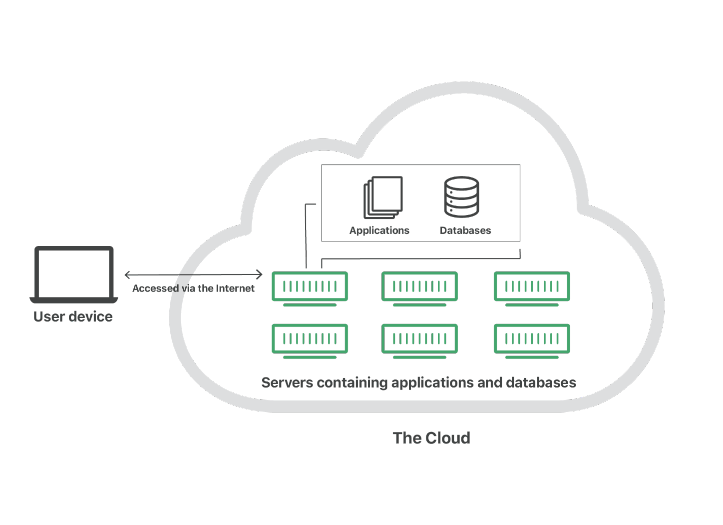
Cloud computing is possible because of a technology called virtualization. Virtualization allows for the creation of a simulated, digital-only “virtual” computer that behaves as if it were a physical computer with its own hardware.
The technical term for such a computer is virtual machine. When properly implemented, virtual machines on the same host machine are sandboxed from one another, so they do not interact with each other at all, and the files and applications from one virtual machine are not visible to the other virtual machines even though they are on the same physical machine.
For businesses, switching to cloud computing removes some IT costs and overhead: for instance, they no longer need to update and maintain their own servers, as the cloud vendor they are using will do that.
This especially makes an impact for small businesses that may not have been able to afford their own internal infrastructure but can outsource their infrastructure needs affordably via the cloud.The cloud can also make it easier for companies to operate internationally, because employees and customers can access the same files and applications from any location.
How does cloud computing work?
Virtual machines also make more efficient use of the hardware hosting them. By running many virtual machines at once, one server becomes many servers, and a data center becomes a whole host of data centers, able to serve many organizations. Thus, cloud providers can offer the use of their servers to far more customers at once than they would be able to otherwise, and they can do so at a low cost.
Even if individual servers go down, cloud servers in general should be always online and always available. Cloud vendors generally back up their services on multiple machines and across multiple regions.
Users access cloud services either through a browser or through an app, connecting to the cloud over the Internet — that is, through many interconnected networks — regardless of what device they are using.
Main models of cloud computing
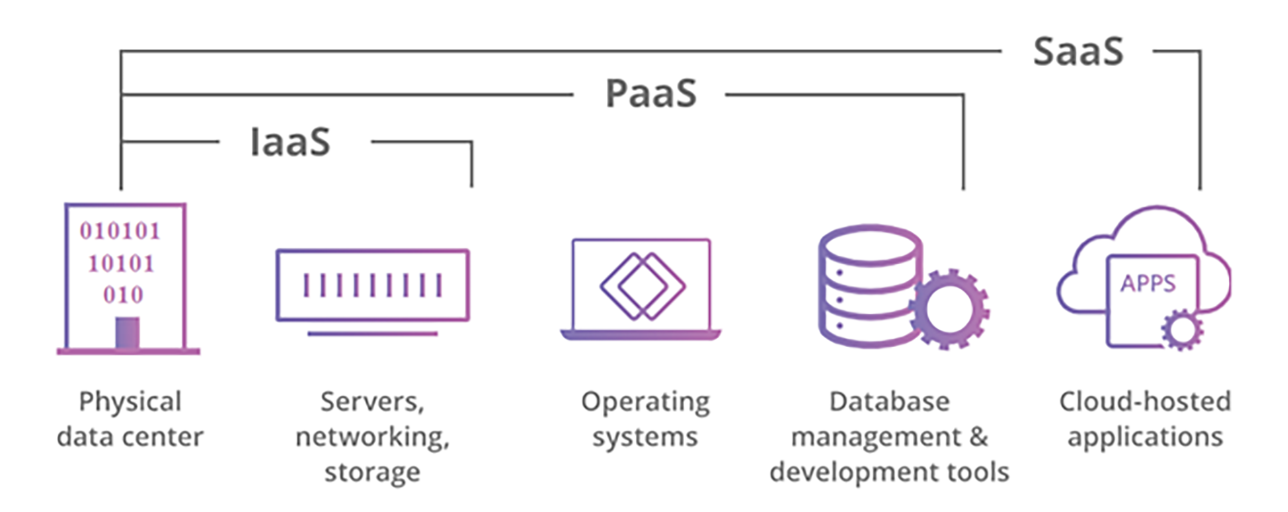
Software-as-a-Service (SaaS)
Instead of users installing an application on their device, SaaS applications are hosted on cloud servers, and users access them over the Internet. SaaS is like renting a house: the landlord maintains the house, but the tenant mostly gets to use it as if they owned it. Examples of SaaS applications include Salesforce, MailChimp, and Slack.
Platform-as-a-Service (PaaS)
In this model, companies don't pay for hosted applications; instead they pay for the things they need to build their own applications. PaaS vendors offer everything necessary for building an application, including development tools, infrastructure, and operating systems, over the Internet. PaaS can be compared to renting all the tools and equipment necessary for building a house, instead of renting the house itself. PaaS examples include Heroku and Microsoft Azure.
Platform-as-a-Service (PaaS)
Infrastructure-as-a-Service (IaaS): In this model, a company rents the servers and storage they need from a cloud provider. They then use that cloud infrastructure to build their applications. IaaS is like a company leasing a plot of land on which they can build whatever they want — but they need to provide their own building equipment and materials. IaaS providers include Digital Ocean, Google Compute Engine, and OpenStack.
Formerly, SaaS, PaaS, and IaaS were the three main models of cloud computing, and essentially all cloud services fit into one of these categories. However, in recent years a fourth model has emerged
Function-as-a-Service (FaaS)
FaaS, also known as serverless computing, breaks cloud applications down into even smaller components that only run when they are needed. Imagine if it were possible to rent a house one little bit at a time: for instance, the tenant only pays for the dining room at dinner time, the bedroom while they are sleeping, the living room while they are watching TV, and when they are not using those rooms, they don't have to pay rent on them.
FaaS or serverless applications still run on servers, as do all these models of cloud computing. But they are called "serverless" because they do not run on dedicated machines, and because the companies building the applications do not have to manage any servers.
Also, serverless functions scale up, or duplicate, as more people use the application — imagine if the tenant's dining room could expand on demand when more people come over for dinner! Learn more about serverless computing (FaaS).